CASE STUDY: Partnering for More Efficient Care
| The Challenge
USACS Medical Director and hospital Director of Emergency Services lead team in changing front-end processes and culture to improve care delivery.
In late 2024, budget deficits led this community hospital’s parent health system to reduce programs and staffing. With significant nursing shortages in the following months, discharge LOS in the 20-bed ED crept above 220 minutes and the LWBS rate averaged 4.3%. Reduced efficiency and morale challenges also impacted experience of care. Patients’ overall rating of the ED dropped to the 15th percentile ranking.
“With busy waiting rooms, gone are the days when we can bring everyone back to a treatment room like we were taught in medical school. Waiting room medicine is not ideal, but we know that if you see people more quickly, they’re more likely to stay and get the care they need.” USACS ED Medical Director
| The Solution
In August 2025, USACS and health system leadership launched a concentrated campaign to improve ED efficiency and patient experience. USACS deployed its Clinical Resource Group (CRG), a team of in-house nurses and change experts who support local Medical Directors and nurse leaders in EDs across the nation in enhancing operations. After its initial assessment, the CRG recommended the ED establish a provider in triage (PIT). In this model, patients check in and immediately see a triage nurse who appropriately prioritizes them for the PIT—typically an advanced practice provider (APP)—who may evaluate them in the waiting room if no beds are available. This clinician can quickly treat and release lower acuity patients and initiate orders for lab work and imaging for more complex patients while they await a room.
“There is a lot of cooperation and choreography to this whole dance that goes into triage,” the Medical Director says. “There were major workflow changes, which were mostly born by the APPs.”
With these initial changes and the hospital’s transition to the Epic electronic medical records system, the ED saw wait times and LWBS rates begin to decline in November. That month, the USACS CRG collaborated with the hospital’s Director of Patient Experience to host mandatory in-person patient experience training for all ED staff—from clinicians to security guards—to enhance patient engagement using aligned USACS and hospital strategies. At the same time, the hospital hired an experienced nurse leader as its new Director of Emergency Services, hoping to stabilize nurse staffing and improve morale. Together, she and the Medical Director drove cultural and operational changes that have improved every target metric.
Front-End Redesign
To enhance the PIT model and decongest the waiting room, the Medical Director and Director of Emergency Services worked with the hospital and the CRG to:
- Dedicate an ED room for triage nurse evaluations and several others as treatment rooms for the PIT APPs.
- Develop standard protocols for which triaged patients should return to the waiting area and which should move to a room.
- Implement systematic board rounds for nurses and clinicians to periodically review patient status together.
- Assign a lab courier to the ED to accelerate diagnostic turnarounds.
While changing processes always presents challenges, the nurses and APPs who staffed the new vertical care area knew that this model would improve care.
“We want to see patients and get things moving for them,” says the USACS nurse practitioner who serves as the ED’s APP Lead. “This gave us a way to get out front and do that for them as soon as possible.”
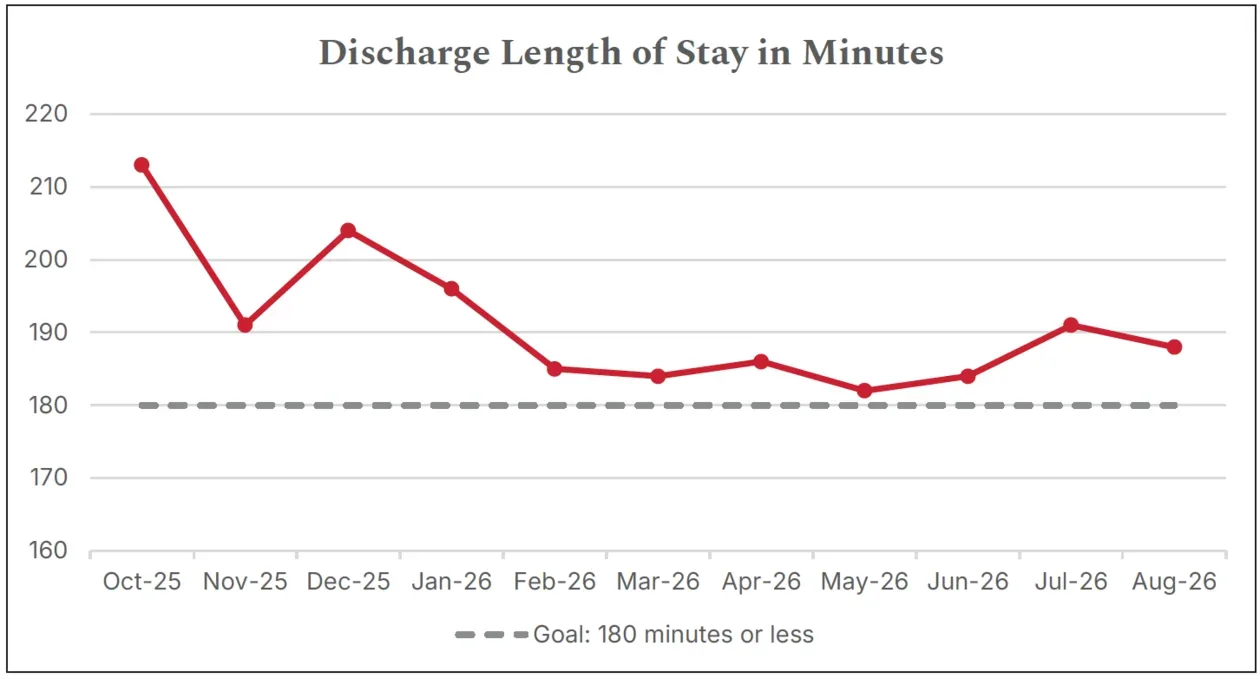
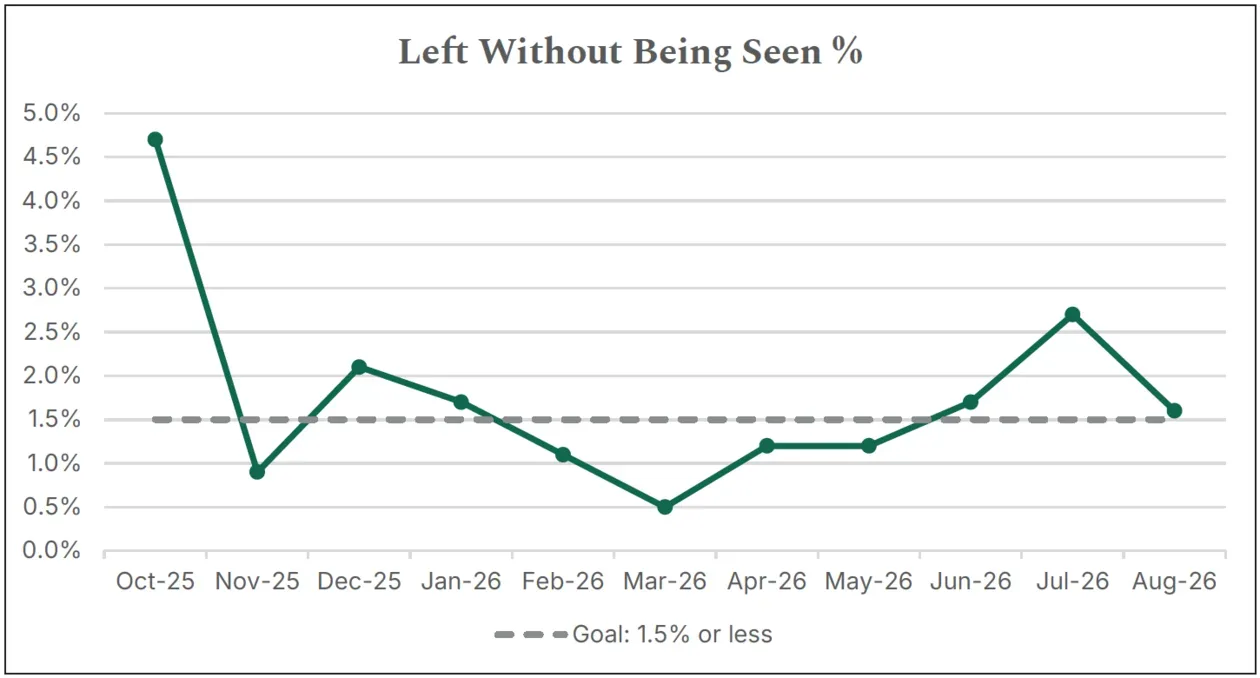
With these modifications, LWBS improved dramatically, averaging 1.2% in the first half of 2026. Door-to-clinician time remained under goal during that same period. Despite increased census moving into the summer of 2026, discharge LOS averaged 186 minutes, down from 209 in the last three months of 2025.
“A 23-minute drop in length of stay is a huge deal. It’s hard to move those minutes, but there is a great interdisciplinary team here and the other leaders in the hospital have been open to collaborating.” Director of Emergency Services, Partner Hospital
Complementary Roles
The ED Medical Director and Director of Emergency Services had to reconcile their different approaches to leadership in order to develop an effective dyad partnership. While the Medical Director is a laid-back and personable manager, the Director of Emergency Services is more structured and direct. They learned to capitalize on these differences to create a unified culture of accountability.
“The Director of Emergency Services had a heavy lift,” says the Medical Director. “I have never seen an ED staff’s morale so low. She jumped in with both feet and her approach really moved the needle on the culture among the nursing team.”
The Director of Emergency Services immediately implemented regular schedules for nurses and standard work processes to improve patient and nurse safety. She also reinforced appropriate channels, ensuring that nurses reported challenges to nursing leadership rather than to physicians. The Medical Director helped the entire ED team trust these changes.
“He builds people up,” says the Director of Emergency Services. “He’s very good about giving recognition and reinforcing positive trends. That has helped morale.”
The ED leaders increased their meeting cadence from once a month to twice per week, providing frequent opportunities to evaluate progress and adjust strategies. As a testament to the partnership, the Director of Emergency Services even joined the Medical Director at USACS’ meetings with the health system.
Transparent Partnership
Leveraging the hospital’s robust data analytics capabilities, the ED leaders developed a Quality Dashboard for the department to ensure that nurses, staff, and clinicians are all aware of the ED’s performance. Publicly sharing LWBS rates, patient experience scores, and other key throughput and quality measures improved accountability, ensured the team understood why processes were changing, and built confidence in their success.
The Director of Emergency Services moved the nurses’ start-of-shift huddle from the staff lounge to the middle of the ED, erected a large white board to share daily announcements and performance metrics, and worked with the Medical Director to integrate clinicians into the meeting. This ensures the entire clinical team has a shared understanding of the day’s given challenges—like an out-of-order CT scanner or no respiratory therapist coverage—and supports consistent expectations and patient communication.
As ED volume increased in the summer of 2026, the nurses and clinicians worked together to adjust the vertical care model and reverse increased wait times.
Investment in Patient Experience
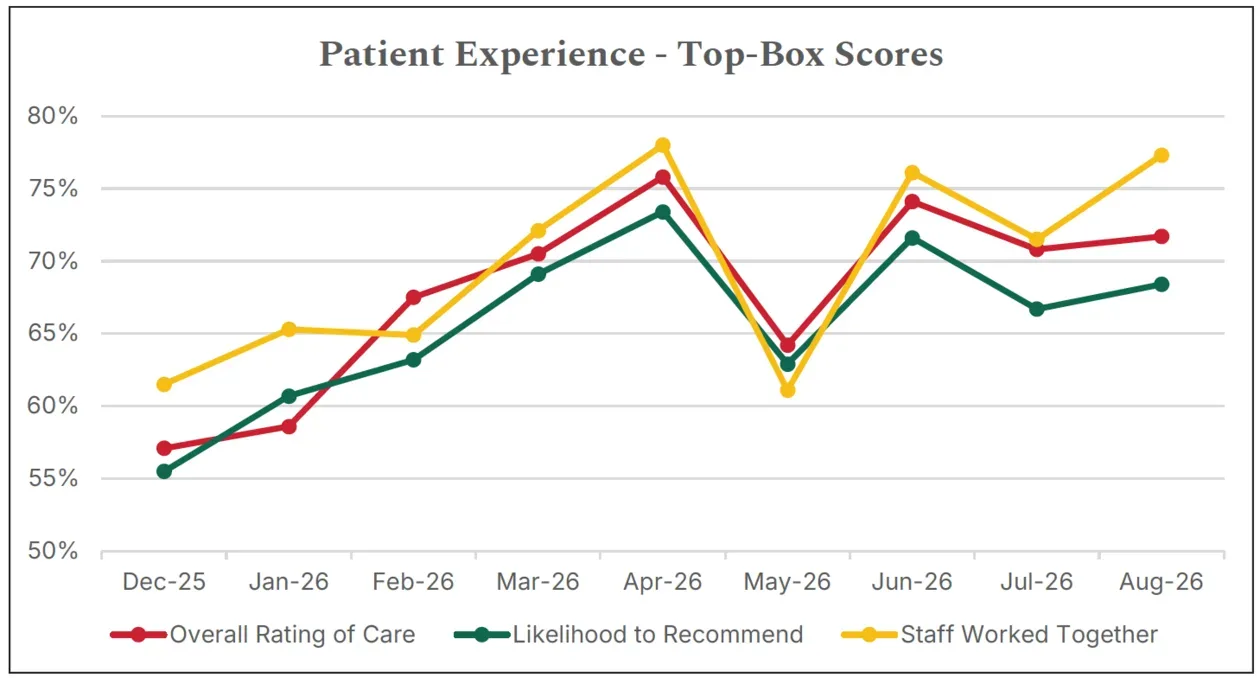
The hospital and USACS made several changes that boosted ED patients’ overall rating of care to the 81st percentile by April 2026, with a top-box score above 75%.
- The USACS CRG collaborated with the hospital’s Director of Patient Experience to host follow-up in-person training for all ED staff focused on ensuring that patients understand their treatment plans.
- The nursing team hard-wired communication board updates into its workflow to maintain patient awareness of their care teams and plans for the day.
- The Medical Director and Director of Emergency Services set bi-weekly meetings specifically to review patient feedback.
- A new recognition program rewards clinicians and nurses who are specifically named in surveys for providing exceptional care.
| The Results
After staffing and program changes at a New England hospital slowed Emergency Department (ED) throughput, US Acute Care Solutions (USACS) partnered with the hospital to optimize department flow, strengthen the nurse-clinician partnership, and improve data transparency. In the first eight months of these changes, the ED achieved:
- A 64% drop in the percentage of patients who left without being seen (LWBS).
- A 28% decrease in door-to-clinician time.
- A 14% drop in discharge length of stay (LOS).
- A 66-point increase in the percentile ranking for patients’ overall rating of the ED.
The changes that have improved patient care have also enhanced the ED team’s satisfaction. At this Magnet hospital, each department’s nursing team completes a nursing engagement survey. The ED’s score has improved dramatically with its nurses now ranking second in the hospital for nursing satisfaction.
“The nursing engagement and where we’ve come to doesn’t happen without physician collaboration,” the Director of Emergency Services says.
Clinicians feel the same way, according to the Medical Director. Twice each year, USACS asks its physicians and APPs to rate their likelihood to recommend the practice to a colleague on a scale of one to 10. Results are aggregated into a Net Promoter Score (NPS) that can range from -100 to 100. A score of 50 is considered excellent. In the spring of 2026, USACS clinicians at Exeter gave the practice an outstanding NPS of 67, the team’s highest score to date.
About USACS
ln 2015, the nation’s premier acute care medicine practices formed USACS, a physician-owned and physician-led company that set forth a new model for acute care management. Every full-time USACS physician is offered equity in the company, accounting for 98% of USACS’ ownership and empowering the group to recruit top-quality clinicians. The remaining 2% is held by health system partners, leaving USACS unencumbered by the volatility of private equity investment. Physician ownership aligns the missions of clinicians and hospital partners to drive higher standards in quality and value. Today USACS cares for more than 11 million patients annually across more than 400 programs in 27 states.